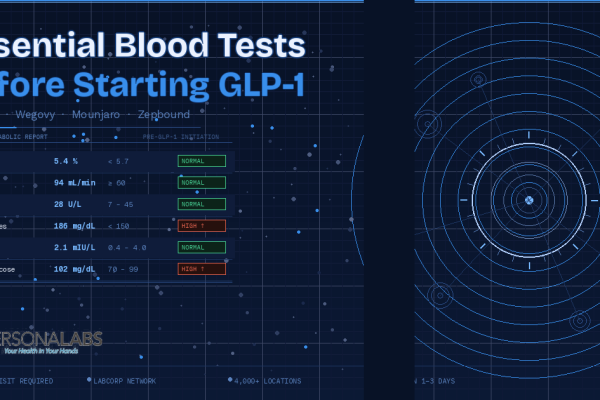

If you’re starting a GLP-1 medication like Ozempic, Wegovy, Mounjaro, or Zepbound, your doctor has probably mentioned your A1c. But if you’re like most people, you may not fully understand what that number actually measures — or why it matters just as much after you start treatment as it did before.
Here’s what your A1c really tells you, and why checking it on your own terms, without waiting for your next scheduled appointment, can help you track your progress with real data instead of guesswork.
What A1c Actually Measures
A single blood sugar reading only tells you what’s happening in your bloodstream at that exact moment. Eat a meal, go for a run, or just wake up stressed, and that number shifts. It’s a snapshot, not a story.
A1c is different. It measures the percentage of your hemoglobin — the protein in red blood cells that carries oxygen — that has glucose attached to it. Because red blood cells live for about three months, your A1c reflects your average blood sugar over the past 90 days, smoothing out the day-to-day noise and giving you (and your doctor) a much more reliable picture of what’s actually going on.
General reference ranges:
- Below 5.7% — Normal
- 5.7% to 6.4% — Prediabetes range
- 6.5% or higher — Consistent with diabetes
These ranges are general guidelines, not a diagnosis — your doctor will interpret your specific number in the context of your full health picture. You can read more about how the test works directly from the CDC’s diabetes testing guide or the American Diabetes Association’s overview of A1C.
Why A1c Matters Before Starting a GLP-1 Medication
GLP-1 medications work in part by helping your body manage blood sugar more effectively, which is why many people are prescribed them specifically for type 2 diabetes management, even when weight loss is the more talked-about effect. Before starting, most doctors want a baseline A1c on record — not just to help guide dosing, but to give you something concrete to compare against later.
Without a baseline, you’re left asking “is this working?” based on how you feel or what the scale says. With a documented A1c, you have an actual number to track. If you’re also curious about your broader metabolic health at the same time, our Comprehensive Metabolic Panel (CMP 14) pairs well with an A1c test for a fuller picture of blood sugar, kidney, and liver function in one visit.
Why It Matters After You Start, Too
This is the part people often overlook. Once you’re on a GLP-1 medication, your A1c can be one of the clearest signals of whether your treatment is doing what it’s supposed to do — independent of weight changes, which can be influenced by a lot of other factors.
Many people find it useful to recheck their A1c roughly every three months while adjusting to a new medication or dose, simply because that’s how long it takes for a new average to fully show up in the number. Checking too early won’t give you an accurate read; checking on that three-month rhythm will.
Why Order Through Personalabs Instead of Waiting
Your doctor may already be tracking this for you as part of routine care — and if so, that’s great, keep doing it. But not everyone sees their prescribing doctor every three months, and for some people, insurance scheduling, appointment availability, or simply wanting to check in sooner makes self-ordered testing a useful option.
With Personalabs, you can order an A1c test directly, without waiting for a scheduled visit:
- No doctor’s visit or referral required
- Results in as little as 24-48 hours, sent securely to your account
- One simple blood draw at any of our 4,000+ partner lab locations nationwide
- $39 — no insurance paperwork, no surprise billing
This isn’t a replacement for your doctor’s guidance, especially while you’re adjusting medication or dosage. Think of it as a way to check in on your own timeline, with real data to bring to your next appointment instead of relying on how you feel.
A Few Things to Keep in Mind
A1c isn’t perfect for everyone. Certain conditions — including some anemias and blood disorders — can affect red blood cell lifespan and skew A1c results. If you have a known blood condition, talk to your doctor about whether A1c is the right test for you, or whether a different marker makes more sense.
One number doesn’t tell the whole story. A1c is a strong tool for tracking trends over time, not a single verdict. If your number is a surprise, that’s a conversation to have with your doctor, not a reason to panic.
Timing matters. If you’ve recently changed your dose or just started treatment, give it time before rechecking — a test taken too soon won’t reflect the change yet.
Frequently Asked Questions
How long does it take for A1c to change after starting a GLP-1 medication? Because A1c reflects your average blood sugar over roughly the past three months, most doctors recommend waiting about 12 weeks after starting or changing a dose before rechecking. Testing sooner won’t give you an accurate picture of the change yet.
Do I need to fast before an A1c test? No. Unlike a fasting glucose test, A1c doesn’t require fasting and can be taken at any time of day, making it easy to fit into your schedule.
Can I order an A1c test without a doctor’s referral? Yes. Through Personalabs, you can order an A1c test directly online without a doctor’s visit or referral. You’ll still want to discuss your results with your doctor, especially if you’re managing a GLP-1 prescription.
Is a self-ordered A1c test as accurate as one done through my doctor’s office? Yes. Your sample is processed at the same certified clinical laboratories doctors use. The difference is convenience — you’re ordering the test directly rather than waiting for a scheduled visit.
What’s the difference between A1c and a regular blood sugar test? A standard glucose test measures your blood sugar at the exact moment it’s drawn. A1c measures your average blood sugar over the past two to three months, giving a more stable, longer-term picture that isn’t thrown off by what you ate that morning.
How much does an A1c test cost at Personalabs? $39, with results delivered securely to your account in as little as 24-48 hours.
The Bottom Line
Whether you’re just starting a GLP-1 medication or a few months into treatment, your A1c is one of the most useful numbers you can track. It’s not about replacing your doctor’s care — it’s about having real data on hand, on your own schedule, so you’re never just guessing whether things are moving in the right direction.
If you’d rather get a broader baseline alongside your A1c, our Comprehensive Wellness Profile covers the core markers used in a standard annual physical, including diabetes risk screening, in one visit.