When you’ve undergone cholecystectomy or gallbladder removal surgery, your typical diet shouldn’t be the same as before after the procedure. This is because your gallbladder plays a crucial role in fat digestion, and its absence makes it challenging for the digestive system to break down fats in large amounts.
Having your gallbladder surgically removed entails that you’ll likely have to consume less fatty and fried foods, along with those that could trigger digestive distress, as an indirect result of missing a gallbladder.
In this guide, we’ll walk you through the top foods to avoid after gallbladder removal and those that are safe to consume.
📅 Last Updated: April 2026 | 🩺 Medically Reviewed by: Edward Salko, D.O., Medical Director | 🧪 Lab Partner: Labcorp
Foods to Avoid After Gallbladder Removal
There is no one-size-fits-all when it comes to diet adjustment after cholecystectomy. Your doctor will help you determine the specific foods that should be taken out or limited from your regular meals. In some cases, you will be advised to eat them in moderation.
Here are some of the common foods to avoid after gallbladder removal.
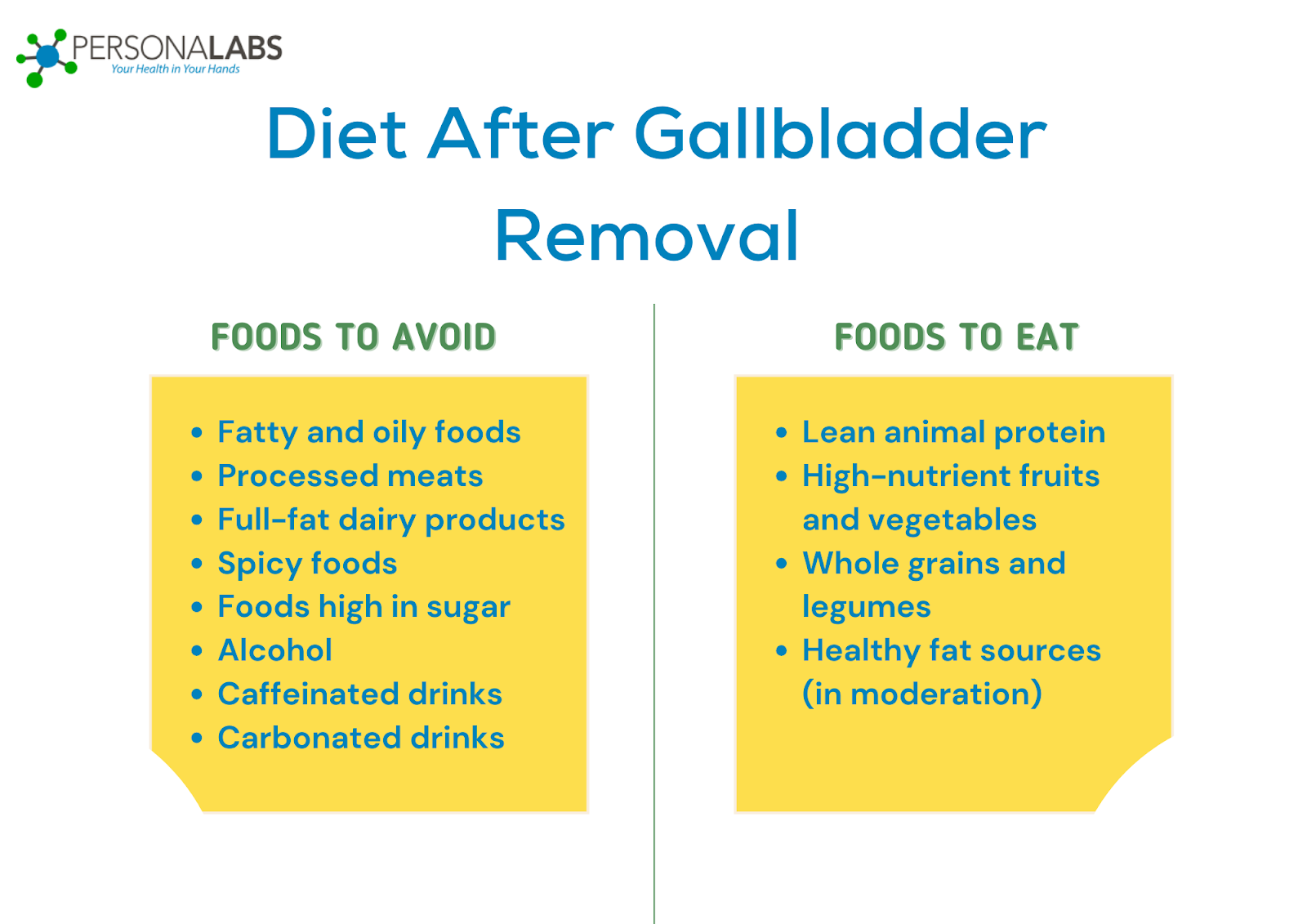
Fatty and oily foods
A low-fat diet(1) is highly recommended at least within the week after cholecystectomy; otherwise, you risk experiencing diarrhea. This is especially true if you already have issues with bowel movements before the operation and you are a male under the age of 45.
The absence of a gallbladder also means that the bile produced by the liver already lost its place of storage. Bile is produced for various reasons, the biggest of which is to aid in breaking down fats(2).
If you continue to overeat fatty foods, bile production continues as it is, but instead of storing the extra bile in the gallbladder, everything goes down to the intestines. This rerouting ultimately leads to diarrhea.
Additionally, it is possible that some fats may not be digested or fully absorbed. As a result, you may observe streaks of oil in your stool. Plus, the excess fats can also lead to gas and bloating. That said, eliminate or decrease your intake of the following fatty foods.
- Deep-fried foods like French fries, doughnuts, potato chips, crackers, fried chicken, and onion rings
- Fatty cuts of meats, such as pork belly, chicken thighs, and beef ribeye
Processed meats
Foods like sausages, bacon, hot dogs, salami, chicken nuggets, and spam contain not just high amounts of fats but unhealthy kinds. Hence, they typically make the list of foods to avoid after gallbladder removal. In some cases, you may only be asked to regulate your intake.
In addition, processed foods, in general, are packed with sodium and preservatives. Too much consumption of such foods can cause fluid buildup, leading to bloating and gas. Plus, you’ll be at risk of experiencing digestive distress and even high blood pressure.
Full-fat dairy products
People who have their gallbladder surgically removed should avoid or limit the intake of cheese, whole milk, creams, and other full-fat dairy products. Again, we go back to the fact that these foods contain concentrated lipids or fats that your body cannot fully process due to the absence of the gallbladder.
Sometimes, your doctor may recommend milk substitutes or low-fat dairy products. The recommendation will also depend on other factors, not just fat content, such as your tolerance to lactose.
| Pro tip: Aside from lactose intolerance, one condition to watch out for is dairy allergy. If you’re experiencing digestive issues when consuming milk or other related products, consider taking the dairy allergy test panel. |
Spicy foods
Peppers and other spicy foods may stimulate bile production(3) in the liver. Keep in mind that the gallbladder stores bile. Without its repository, bile can leak down to the intestine, which can cause diarrhea, abdominal pain, and digestive discomfort.
Nonetheless, it’s important to note that individual responses to spicy foods may also vary. Therefore, there’s a good chance that you can still eat spicy foods and not experience any gastrointestinal problems even after gallbladder removal. But this will ultimately depend on your doctor’s assessment.
Foods high in sugar
Eating sweets and sugary foods usually doesn’t trigger any issues if you don’t have a gallbladder anymore. However, too much sugar can affect bile production, resulting in digestion problems.
For example, if you overeat dessert, large amounts of insulin are produced, which can indirectly delay the release of bile from the liver. As a result, fats remain unprocessed, leading to gastrointestinal problems like diarrhea and abdominal pain.
You can retain sugar and carbohydrates in your diet, but you have to consume them moderately. If you have other metabolic disorders like obesity and type 2 diabetes, more restrictions will likely be imposed.
Alcohol
Alcohol promotes bile production, which is a process that should be highly regulated after cholecystectomy. You may experience abdominal pain, bloating, and gas, among others, if you drink alcohol immediately after your gallbladder removal surgery. In some cases, the same symptoms persist even after a specific time following the procedure.
On top of that, alcohol may also cause irritation to your gastrointestinal tract, exacerbating the digestive discomfort.
Drinking alcohol is not entirely prohibited for most. But make sure to check with your primary care provider first, as the impact of alcohol on your health after losing the gallbladder could be more drastic than others.
Caffeinated drinks
Caffeine can stimulate not just your energy production but certain digestive functions as well. For example, it can trigger the release of gastric acid in the stomach and increase bowel movement.
Hence, if you have your gallbladder removed, you will likely be more prone to diarrhea if your body reacts differently to coffee before the procedure. Nonetheless, others may have a more favorable response to drinks like coffee. Still, it’s best to consume caffeinated beverages in moderation.
Carbonated drinks
After cholecystectomy, you will be likely prone to digestive discomfort due to undigested fats or bile being released to the intestines. With this in mind, consider stirring clear of sodas, ginger ale, root beer, and other carbonated drinks, as they can stimulate gas production and bloating, triggering digestive distress.
Post-Gallbladder Removal Diet — Quick Reference Guide
| Category | Foods to AVOID | Foods That Are SAFE |
|—|—|—|
| Fats | Fried foods, butter, lard, full-fat dairy | Olive oil (small amounts), avocado, lean proteins |
| Meat | Sausage, bacon, hot dogs, fatty cuts | Chicken breast, turkey, fish, egg whites |
| Dairy | Whole milk, cream, full-fat cheese | Low-fat milk, Greek yogurt, skim cheese |
| Vegetables | Gas-producing in excess: broccoli, cabbage | Cooked carrots, squash, green beans, potatoes |
| Beverages | Carbonated drinks, alcohol, full-fat smoothies | Water, herbal tea, diluted juices |
| Grains | White bread, pastries, processed snacks | Oats, brown rice, whole grain bread |
| Sweets | High-sugar desserts, candy, ice cream | Small amounts of fruit, dark chocolate in moderation |
Blood Tests to Monitor Your Health After Gallbladder Removal
Gallbladder removal (cholecystectomy) affects more than just digestion. Without a gallbladder to store bile, your liver must release bile continuously and directly into the small intestine. This change affects fat absorption, cholesterol metabolism, and can impact
nutrient levels over time.
The following blood tests are recommended after gallbladder removal to monitor your metabolic health:
Comprehensive Metabolic Panel (CMP) — monitors liver function after surgery. Your liver takes on increased workload after gallbladder removal. ALT, AST, and bilirubin levels confirm your liver is adapting well. Recommended: 6 weeks post-surgery and annually.
Lipid Panel — cholesterol levels frequently change after cholecystectomy. Some patients see cholesterol rise due to altered bile acid metabolism. A baseline lipid panel post-surgery and annual monitoring helps track cardiovascular risk. Recommended: 3 months post-surgery and annually.
Vitamin D and Vitamin B12 — fat-soluble vitamin absorption can be impaired after gallbladder removal because bile is needed to absorb fat-soluble vitamins A, D, E, and K. Vitamin D deficiency is the most common nutritional consequence of cholecystectomy.
Ferritin and Iron Panel — iron absorption can also be affected. Fatigue after gallbladder surgery that persists beyond 6-8 weeks warrants an iron panel to rule out deficiency.
All available through Personalabs without a doctor’s visit. Order online, visit any Labcorp location, and get results in 24–48 hours.
Foods to Eat After Gallbladder Removal
Altering your diet after cholecystectomy not only means removing or limiting certain foods from your staple meals. As established earlier, the general rule of thumb is to avoid anything fatty or greasy.
However, it would also benefit your health to adopt a holistic diet that accommodates rich sources of nutrients that correspond to your specific needs. In doing so, the following are generally the recommended foods to eat after gallbladder removal.
Lean animal protein
Animal protein sources typically have fats that could aggravate gastrointestinal problems without a gallbladder. However, lean meat contains less than 10 grams of fat(4), making it an ideal option for those who prefer not to go meatless.
Examples of lean protein foods include fish (white-fleshed), chicken breasts and tenders, beef loin, egg whites, and shellfish.
High-nutrient fruits and vegetables
After your gallbladder removal surgery, it is crucial to eat nutrient-rich foods to help you recover and heal fast. In addition, consuming high-fiber fruits and vegetables also helps bulk up your stool and reduce inflammation in the stomach and intestinal lining.
When preparing your meals, include leafy greens, bell peppers, broccoli, berries, apples, citrus fruits, melons, etc. Prepare them with less oil or even blend certain fruits and veggies to make delicious, easily digestible smoothies.
Whole grains and legumes
While not generally recommended immediately after surgery, adding whole grains and legumes to your new diet eventually provides you with good sources of fiber. Since diarrhea is a potential issue post-gallbladder removal, eating more fiber can help you achieve bowel regularity(5).
Healthy fat sources (in moderation)
Eating fats must be regulated if you don’t have a gallbladder anymore. However, in most cases, this doesn’t necessarily mean that you should say goodbye to fats completely. After all, lipids remain an essential macronutrient to sustain good health.
But instead of eating any fats, it’s time to be more selective and favor monounsaturated fats, healthier than saturated fats. These fats have proven health benefits to your heart as they can help lower the risks of cardiovascular diseases(6).
Examples of unsaturated fats include avocado, olive oil, soybeans, flaxseeds, walnuts, and dark chocolate. However, make sure not to consume these fats in excess. Otherwise, the adverse impact on your digestion can overshadow the health advantages.
Practical Diet Tips After Your Gallbladder Is Removed
Adjusting your post-surgery diet is not just about knowing what foods to avoid after gallbladder removal. It also involves understanding what eating habits you should correct or adopt moving forward. Here are some practical tips to help you start your diet adjustment.
- Take it slow
After surgery, you will likely be on a liquid diet first, depending on your doctor’s instructions. If this is the case, consider reintroducing solid foods to your digestive system gradually. Doing so will allow your body to adjust properly and prevent gastrointestinal issues.
- Keep hydrated
Drinking sufficient water ensures that your bowel movement is regular, which, in turn, promotes optimal digestion. Water intake may vary based on age, activities, and other factors. Make sure to ask your doctor regarding how much water you should drink in a day.
- Go for low-fat alternatives
When reintroducing food to your digestive system, fats will likely go last. Even so, it’s best to start with food sources that contain zero to low fat. This way, your gastrointestinal tract won’t be too overwhelmed, and you can avoid problems like bloating, gas, and diarrhea.
- Know your triggers
Coming up with a holistic yet sustainable diet will require you to be in tune with your body. Along the way, identify the food that typically causes digestive distress. They may be associated with your lack of gallbladder, but it’s also possible that they serve as sources of allergens. If that’s the case, your healthcare provider may request or perform food allergy testing.
- Avoid overeating
Whether it involves foods to stay away from after gallbladder removal or those recommended for your adjusted diet, it’s crucial not to consume anything in excess. Overeating can lead to problems in your digestion, which can worsen with the absence of your gallbladder.
- Personalize your meal plans
While it is excellent to remain educated about the worst and best foods after gallbladder removal, remember that what works for others may not produce the same results for you. That is to say, personalized meal planning, with guidance from your doctor and/or dietitian, is still the better option if you want to take better control of your health.
Frequently Asked Questions: Diet After Gallbladder Removal
What foods should I avoid after gallbladder removal?
After gallbladder removal (cholecystectomy) you should avoid high-fat foods, fried foods, full-fat dairy, processed meats, carbonated beverages, and alcohol — especially in the first 4 to 6 weeks post-surgery. Without a gallbladder to store and concentrate bile, your body cannot efficiently process large amounts of fat in a single meal. Small, frequent, low-fat meals are the standard dietary recommendation after cholecystectomy.
How long does it take to recover normal digestion after gallbladder removal?
Most people experience loose stools, bloating, and digestive discomfort for 4 to 8 weeks after gallbladder removal as the body adjusts to continuous bile flow. For most patients digestion normalizes within 3 months. A small percentage of patients develop post-cholecystectomy syndrome — persistent diarrhea and digestive discomfort — which warrants evaluation with liver function tests and a digestive health workup.
Can I eat normally after gallbladder removal?
Most people can return to a largely normal diet within 3 to 6 months after gallbladder removal. The key adjustments are limiting high-fat meals, eating smaller portions more frequently, and introducing fatty foods gradually to test tolerance. Some people find they permanently tolerate fatty and spicy foods less well than before surgery.
What blood tests should I get after gallbladder removal?
A Comprehensive Metabolic Panel (CMP) monitors liver function post-surgery. A Lipid Panel tracks cholesterol which can change after cholecystectomy. Vitamin D testing checks for fat-soluble vitamin deficiency which is common after gallbladder removal. A Ferritin and Iron Panel rules out iron deficiency if fatigue persists. All available through Personalabs without a doctor’s visit — results in 24 to 48 hours.
Why do I have diarrhea after gallbladder removal?
Diarrhea after cholecystectomy is caused by bile continuously dripping into the small intestine rather than being released in controlled amounts during meals. This excess bile acts as a laxative in the colon. The condition typically improves within 4 to 8 weeks as the body adapts. Reducing fat intake, eating smaller meals, and avoiding caffeine and alcohol helps. Persistent diarrhea beyond 3 months warrants a liver function panel and gastroenterology evaluation.
The Bottom Line
Knowing which foods to stay away from after gallbladder removal and which ones to include in your new regular diet is your first step in ensuring healthy digestion after your surgery. While the list of best and worst foods for people without gallbladders contains those generally supported by science-backed evidence, your response to such foods will likely direct your meal planning. That said, make sure to work closely with your primary care provider.
Sources:
1 Yueh TP, Chen FY, Lin TE, Chuang MT. Diarrhea after laparoscopic cholecystectomy: associated factors and predictors. Asian J Surg. 2014 Oct;37(4):171-7. doi: 10.1016/j.asjsur.2014.01.008. Epub 2014 Mar 17. PMID: 24647139.
2 Jones MW, Small K, Kashyap S, Deppen JG. Physiology, Gallbladder. 2023 May 1. In: StatPearls [Internet]. Treasure Island (FL): StatPearls Publishing; 2024 Jan–. PMID: 29494095.
3 Prakash UN, Srinivasan K. Fat digestion and absorption in spice-pretreated rats. J Sci Food Agric. 2012 Feb;92(3):503-10. doi: 10.1002/jsfa.4597. Epub 2011 Sep 14. PMID: 21918995.
4 U.S. Department of Agriculture (2023, May 24). What does “lean” and “extra lean” beef mean on a nutrition label? AskUSDA. Retrieved February 13, 2024, from https://ask.usda.gov/s/article/What-does-lean-and-extra-lean-beef-mean-on-a-nutrition-label
5 McRae MP. Effectiveness of Fiber Supplementation for Constipation, Weight Loss, and Supporting Gastrointestinal Function: A Narrative Review of Meta-Analyses. J Chiropr Med. 2020 Mar;19(1):58-64. doi: 10.1016/j.jcm.2019.10.008. Epub 2020 Aug 29. PMID: 33192192; PMCID: PMC7646157.
6 Zong G, Li Y, Sampson L, Dougherty LW, Willett WC, Wanders AJ, Alssema M, Zock PL, Hu FB, Sun Q. Monounsaturated fats from plant and animal sources in relation to risk of coronary heart disease among US men and women. Am J Clin Nutr. 2018 Mar 1;107(3):445-453. doi: 10.1093/ajcn/nqx004. PMID: 29566185; PMCID: PMC5875103.